
What If Your Grocery List Could Actually Shrink Your Debt? Why Bulk-Buy Swaps + Emergency Staples Are the Cheapest Safety Net This Month
Food prices rising again? If your grocery trips feel more like financial shocks, you’re not alone. With inflation squeezing budgets and tariffs pushing pantry essentials higher, smart shoppers are grabbing bulk buys and swapping in shelf-stable staples to both cut costs and create a food safety net, just in case income is disrupted. Here’s exactly how to make these simple swaps work for your wallet—and lower your debt, starting this month.
1. Buy Pantry Staples in Bulk—The Right Way
The secret to shrinking grocery bills is simple: size up on what truly lasts. Bulk buying pantry must-haves like rice, oatmeal, and flour can drop your per-meal costs by double-digit percentages—sometimes by half. Not all staples are created equal, so watch those unit prices and choose wisely.
Buying in bulk can save consumers an average of 25% compared to purchasing standard-sized products. (LendingTree)
Example: A 10-pound bag of Quaker Oats Old Fashioned Oatmeal at Costco is $11.99, while the same is $19.85 at Walmart—an $8 difference for the same breakfasts. And a 5-pound bag of flour is $1.22 at Walmart but $1.49 at Kroger—a nearly 20% savings on every loaf or pancake stack.
Takeaway: Bulk only what you’ll actually use—stick to shelf-stable staples like oats, flour, rice, and beans.
- Scan unit prices, not just the price tag.
- Split meats, cheese, or eggs with friends to maximize deals without waste.
Next step? Start your first “bulk swap” with whatever you use most—like bread or oats—and stash the difference.
2. Share and Split to Avoid Waste (and Stretch Every Dollar)
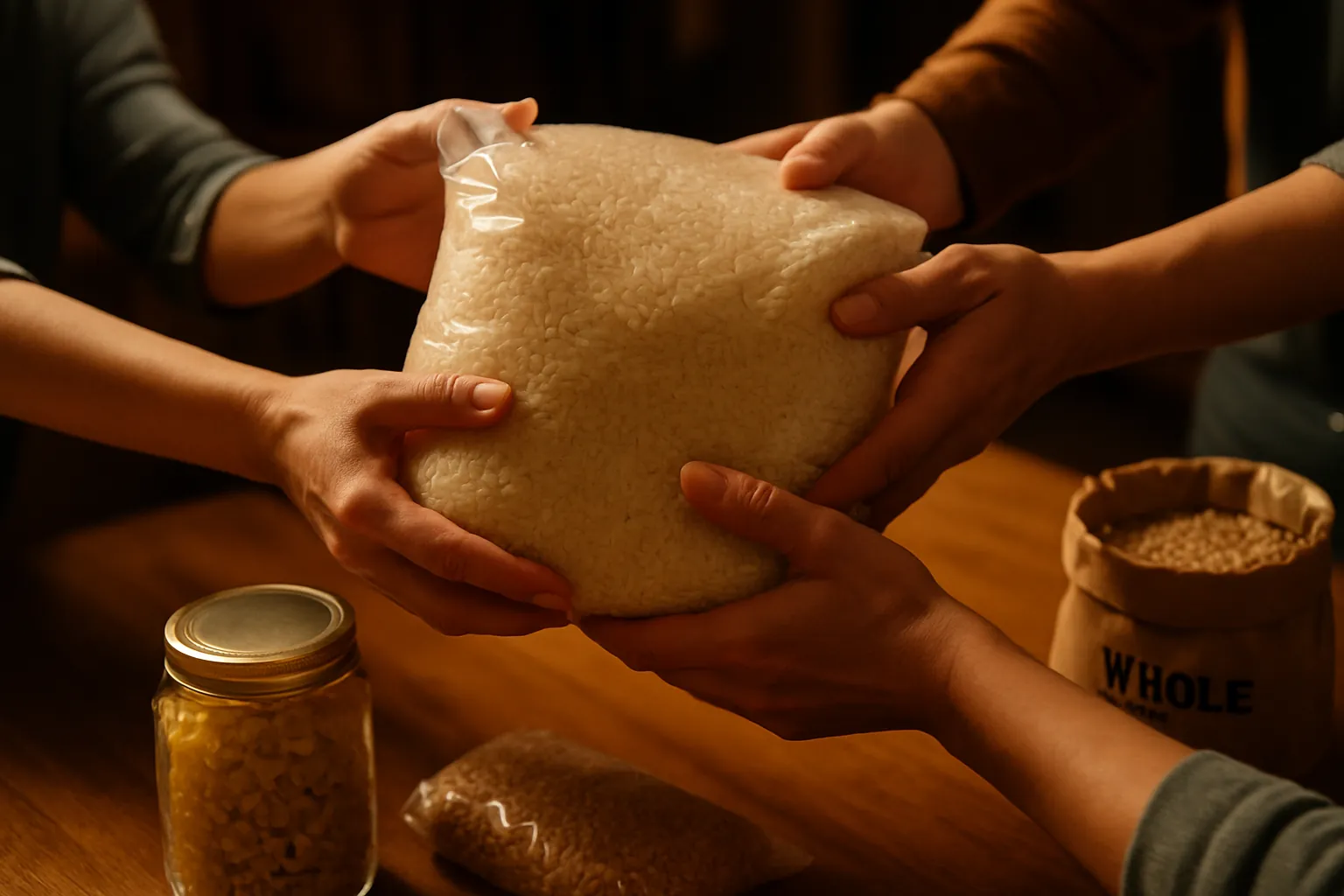
Bigger packages score the best prices, but sometimes there’s just too much—especially for fresh items. The fix? Split bulk buys with neighbors or extended family. This not only stops waste, but locks in low unit prices for everyone at the kitchen table.
Sharing bulk purchases with friends or neighbors can minimize waste and maximize savings, especially for perishable items. (Kiplinger)
Takeaway: Turn your grocery run into a mini buying club—each person saves, and nothing spoils.
- Buy together: Each family picks a staple or two to share.
- Trade extras—swap your extra butter for a friend’s veggies if you’re overloaded.
Try it: Do a group text before a big shop to see who wants to split warehouse club deals this month.
3. Rotate Emergency Staples to Build Your Safety Net
One meal per week made from pantry staples—think beans and rice, pasta, or simple oatmeal—keeps your food bill low and your cupboards stocked. If pay gets disrupted or prices spike further, you’ll have an emergency mini-pantry ready without extra spending.
Rotating one meal per week to a shelf-stable, inexpensive staple like beans and rice can lead to noticeable savings over time. (Kiplinger)
Takeaway: Cheap “emergency meals” cut costs immediately, and leftovers become your safety net.
- Set aside one bag of beans or rice as “just in case” food—swap it out monthly so nothing expires.
- Mark your food with expiration dates and use a freezer for anything that might spoil.
Next: Check dates, freeze, or donate before items go off—your food bank wins, and nothing is wasted.
4. Use Price Tracking Tools to Catch Bulk Deals Early
Don’t miss a sale that could save you real money—let technology work for you. Simple phone apps can track the price of bulk items and send alerts when your favorites go on sale. Extra money saved? Put it toward your emergency fund or cut down your debt.
Using price tracking apps can alert consumers to sales on bulk-stock items, allowing them to purchase staples at reduced prices and allocate the savings to an emergency fund. (LendingTree)
Takeaway: More savings = more debt paid off—let apps find the cheapest prices for you!
- Download a grocery price tracker app.
- Set up alerts for staples like butter, oats, and rice.
Next step: Review your app every Sunday—buy when prices drop and stash the savings.
5. Pick the Right Retailer for Maximum Savings
Not all bulk is best, and not all stores are equal. Savvy budgeters check which local store offers the biggest discounts on the staples they use every week—sometimes that’s the warehouse club, but often, it’s your neighborhood grocery or discount chain.
Purchasing a 2 lb. bag of Mahatma rice at Walmart costs $1.69 vs $2.29 at Kroger, for a 26% savings. (Koopy)
Takeaway: Avoid assuming big-box is cheapest—check local sales for the real deal.
- Compare flyers and apps for staples at 2–3 stores.
- Keep a “best price” note on your phone for your 5 top pantry items.
Action: On your next shop, grab only items at their lowest price. Pocket the difference (and put it toward your smallest debt).
Conclusion
Bulk buying and smart pantry swaps keep your food costs in check—and create a buffer if things get even tighter. Split deals, use tech to grab sales, and always rotate your emergency staples. Try just one new strategy this week—and see how fast you can start shrinking that grocery bill and your debt. Start with one big bulk purchase and watch your food security and savings grow!