
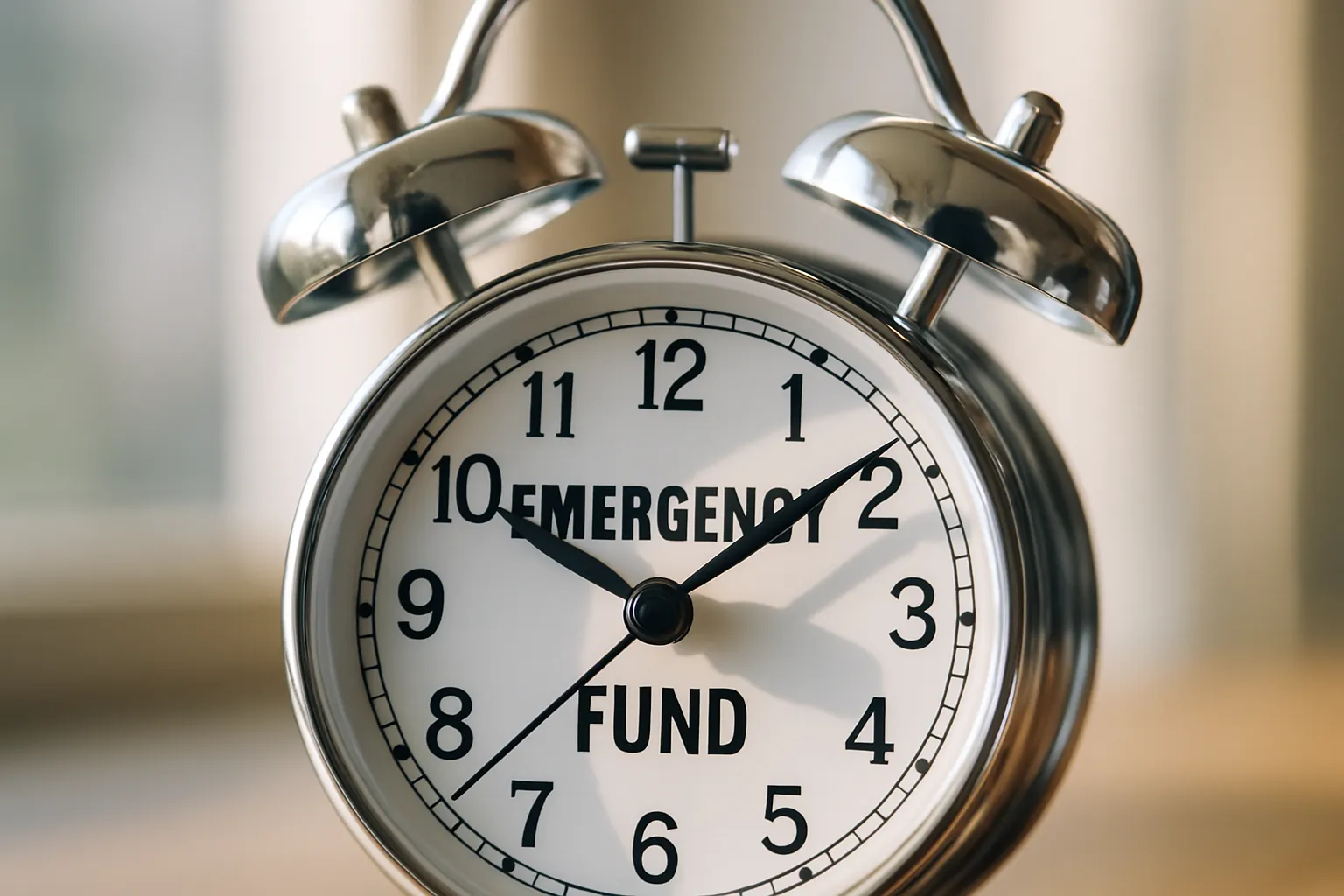
Is Your Emergency Fund Working for You—Or Leaving You Exposed?
If the thought of a surprise bill or sudden job loss keeps you up at night, you’re not alone. With pay simply not keeping up with rising prices, and layoffs making headlines, it’s crucial to rethink the way you protect your finances. Forget the old one-size-fits-all advice—these three flexible safeguard moves are built for real life, and they’re simple enough to start today. Ready to make your cash work smarter and safer?
1. Supercharge Your Safety Net with High-Yield Accounts
Leaving all your emergency cash in a standard savings account? That might cost you real money over time.
High-yield savings accounts now pay up to 4.85% APY—over 20 times the national average. (Source)
Bold takeaway: Every $1,000 you move could earn $48 a year—with no risk and full FDIC insurance up to $250,000.
- Pick a high-yield savings account from a reputable bank or credit union.
- Make sure it’s FDIC or NCUA insured for safety.
- Set up free automatic transfers when you get paid.
Ready to earn risk-free rewards? Open your high-yield account and move a chunk of your emergency cash today.
2. Level Up Flexibility: Mix in Money Market and Short-Term CDs
Too rigid with your cash in a savings account—or stashing stacks at home? Time to blend security with access.
Money market accounts often let you write checks or use a debit card, and some pay interest rates close to 4%. (Source)
Bold takeaway: Add money market accounts and ultra-short-term CDs (as short as 3 months and up to 4.40% APY) to make your savings flexible, but still pay you more.
- Split your emergency savings: keep some in high-yield, some in a money market account for easy access.
- For total security, put a portion in a 3–6 month CD—ensuring you won’t withdraw it for every small bump.
- Check if your money market account allows quick transfers or check-writing for real emergencies.
Don’t let your emergency fund sit idle or get locked away—use different products to match your real needs.
3. Guard Against the Next Budget Surprise: Audit Your Fixed Costs
Your emergency fund is only half the battle. If your bills go up, or your insurance isn’t up to date, a shock can hit harder than it should.
Reviewing and negotiating your insurance policies can lead to significant savings on fixed expenses. (Source)
Bold takeaway: Cutting just $30 a month from your cable, phone, or insurance frees up $360 a year—money better kept for emergencies.
- Every few months, audit your main bills: rent, utilities, phone, insurance.
- Shop around and negotiate directly with providers. Many will offer a lower rate if you just ask.
- Apply your savings: move what you shave off straight into your higher-earning emergency fund!
Give yourself a pay raise—audit two major bills now and transfer the savings before you forget.
Want a safeguard that keeps evolving with your needs?
Conclusion: Act Now—Futureproof Your Paycheck Safety Net
Pick at least one of these flexible moves today: snag a high-yield account, blend in a money market or short-term CD, and trim fixed costs to feed your fund. The faster you act, the more momentum you’ll build against the next paycheck shock. Don’t wait—claim your first protection boost within the next 24 hours so you’re ready for whatever comes next.