
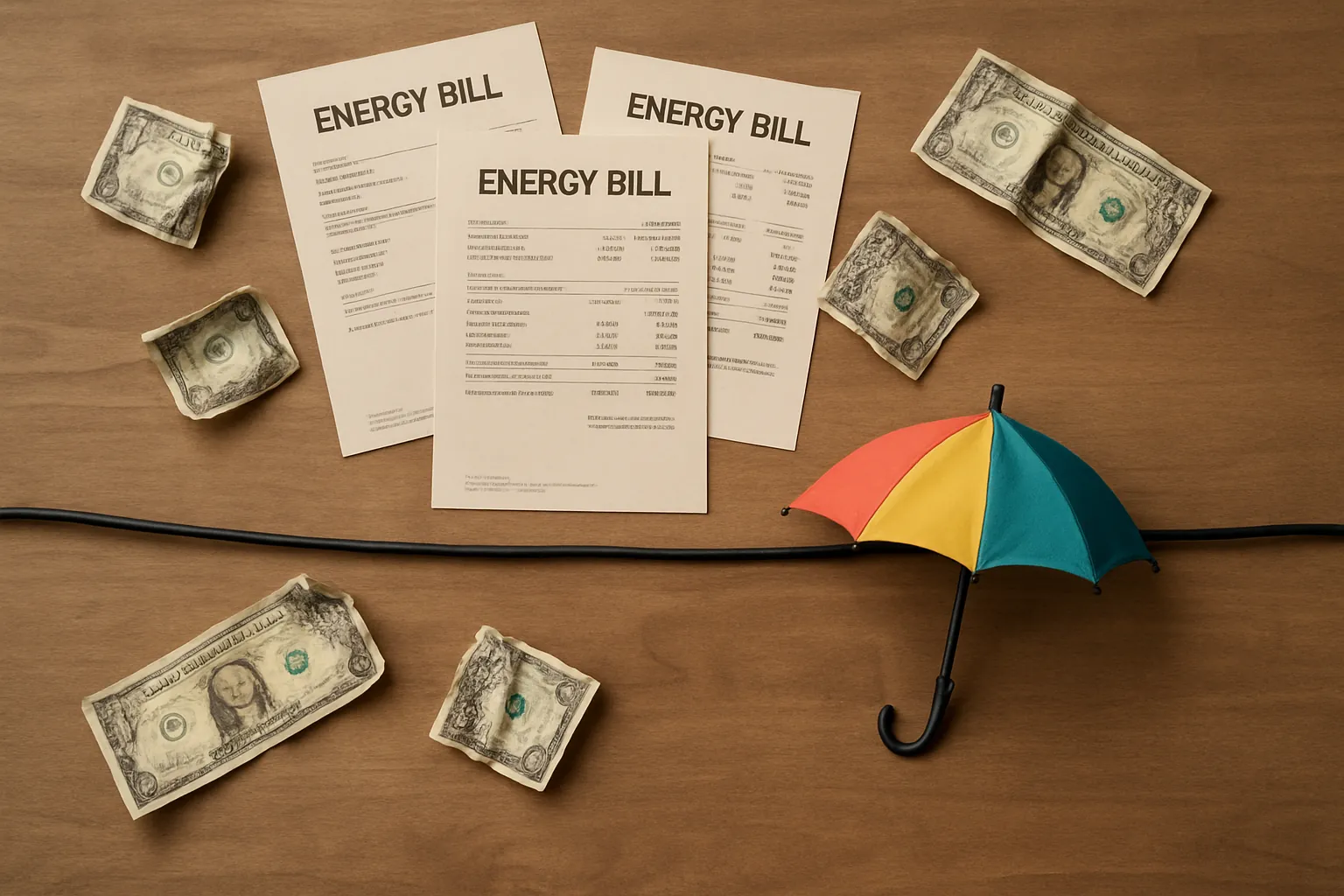
Is Your Utility Bill the New Credit Card Trap? The 4-Step ‘Energy Leak Audit’ for Bill Shock Season
Tired of your electric or gas bill rivaling your grocery tab? You’re not alone: U.S. utility costs are chewing up as much as 5–10% of paychecks, with experts warning the next surge could hit hard thanks to energy-thirsty AI data centers. Don’t let ‘bill shock’ drain your budget—do this simple 4-step ‘Energy Leak Audit’ right now to plug money leaks and put real cash back in your pocket before the next rate hike lands.
Step 1. Locate the Biggest Money Leaks
Ever see your bill spike for no clear reason? Leaky seals, old bulbs, and sneaky appliances may be the culprits.
“Surging U.S. electricity and natural gas prices are expected to affect the cost of living. AI data centers are driving demand for energy.” (247WallSt)
Bold takeaway: Find energy ‘vampires’—unplugging or replacing just two old power strips can save $5–$10 each month.
- Make a list of rooms; check windows and outlets for drafts.
- Swap out any bulbs not labeled LED.
- Try this: Put your hand near doors or window frames—if you feel a breeze, it’s costing you.
Start by focusing on places where you use the most power, like your kitchen or living room. Next step: Seal, swap, and save! 
Step 2. Claim Free or Discount Programs
Don’t pay out-of-pocket when you don’t have to. Many states and cities offer free energy-saving kits (think weatherstripping, LED bulbs) and instant rebates for smart thermostats—no income check required for some programs!
“LIHEAP is a federally funded program to help eligible low-income households meet the home heating and/or cooling portion of their residential energy needs.” (Penn State Extension)
Bold takeaway: Adding a smart thermostat can cut heating/cooling costs by up to $180/year—sometimes for free.
- Search “energy rebates” + your city or utility’s name.
- Apply for LIHEAP or your local weatherization program (Boston.gov Utility Resources).
- When applying, ask: “Do I qualify for a no-cost energy assessment?”
Act early—programs run out as weather changes or funds dry up!
Step 3. Negotiate or Defer Payments—Fast
If your utility bill jumps 25% or more or your household income drops, your state must offer a payment plan. Many also have hardship funds, and some have Winter Termination Programs that stop shutoffs during cold months for enrolled customers.
“Utility companies must provide customers with payment plans that allow a customer to take several months to pay overdue bills. You have the absolute right to spread payment of overdue bills over a minimum of four months.” (Massachusetts Legal Help)
Bold takeaway: Never let bills pile up without calling—ask for a ‘hardship plan’ before you miss a payment.
- Use this script: “Can you enroll me in a payment plan or hardship relief? My income is down and my bill is up.”
- Check if your utility has a Customer Assistance and Referral Evaluation Services (CARES) program for urgent cases.
Mark your calendar each month to review your bill and call if anything looks off or unaffordable.
Step 4. Double-Check for Emergency Help
Did you know nonprofits like the Salvation Army and your state hardship fund can step in for a one-time bill, deposit, or even phone discounts if you’re hit by crisis, illness, or temporary job loss?
“The Salvation Army provides emergency financial aid to cover utility bills or deposits. Funds are often limited, so apply early. They may also offer counseling to help manage finances.” (National Debt Relief)
Bold takeaway: Local and state programs don’t just pay bills—they help avoid shutoffs and keep your lights on after a rough month.
- Apply for The Massachusetts Good Neighbor Energy Fund or your state’s equivalent.
- If bill assistance or CARES is denied, ask about Lifeline for phone/internet savings.
- Set a reminder each season to check new eligibility for help—even if you’ve been denied in the past.
Funds can run low during ‘bill shock’ seasons, so apply at the first sign you might struggle to pay.
Conclusion
Don’t wait for your next monster bill—run this 4-step Energy Leak Audit today. Start by checking for drafts and swapping bulbs, then chase down rebates and assistance programs you qualify for. The fastest way to keep cash in your pocket? Take one new action—like checking for weatherization kits or dialing your utility—before this month’s due date. Plug those leaks and power up your savings!