
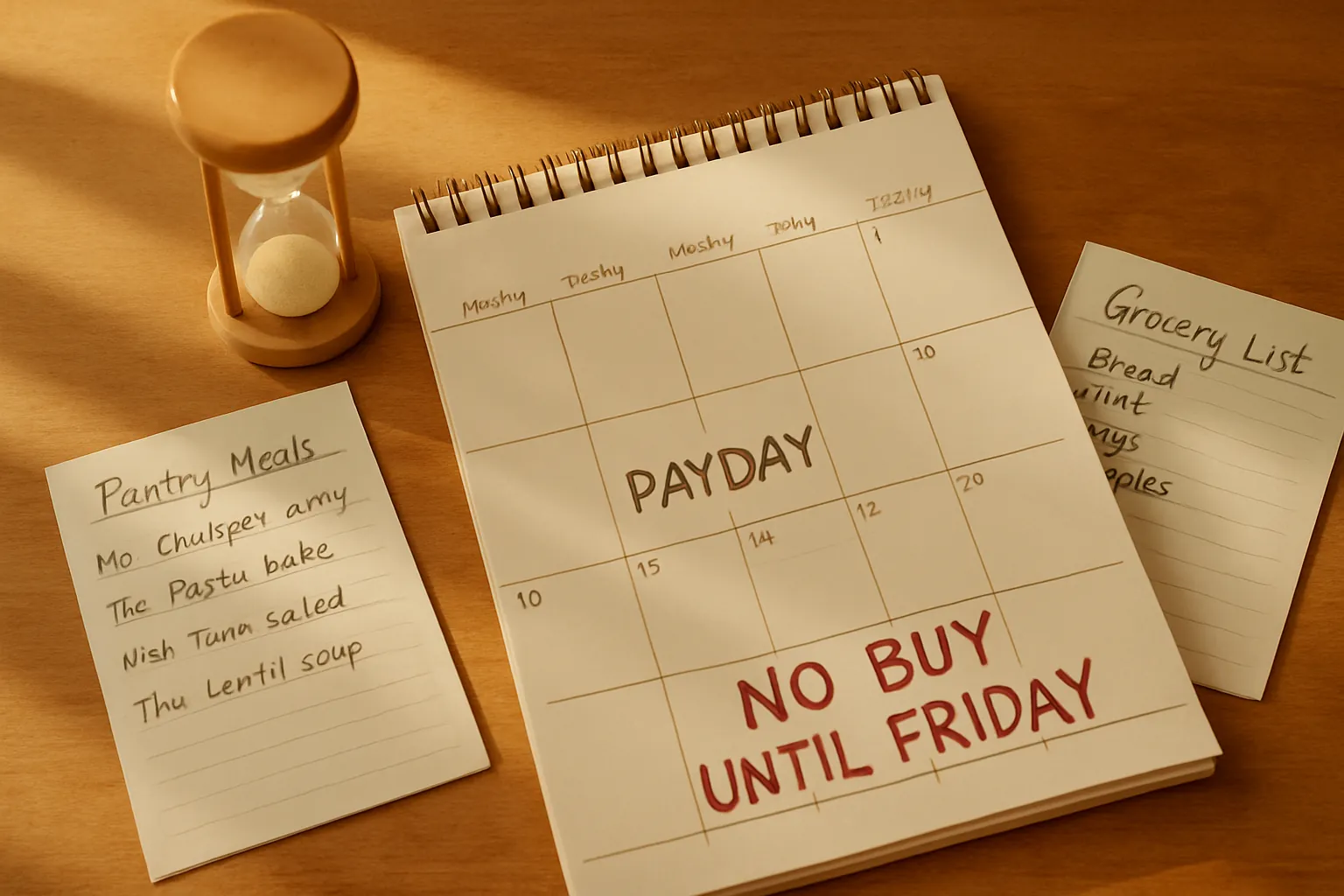
Ever Heard of the ‘Pantry-First Payday’? Why Acting Like Groceries Are Off Limits Until Friday Could Pad Your Wallet All Month
Groceries might be your biggest wild card each month, thanks to rising prices and the never-ending pressure to “just grab one more thing.” But what if simply waiting to shop until payday could turn your pantry into a cash machine—helping you save $40, $100, or more in just a few weeks? Welcome to the ‘Pantry-First Payday’ method, where you treat your pantry as the only store until the next paycheck rolls in. Let’s see how this “freeze the cart” habit can save money, cut food waste, and make your two-week grocery budget feel like it magically doubled.
1. The Challenge: Why Stop Shopping Before Payday?
Constant grocery runs drain your wallet, especially as prices climb. Nearly 80% of U.S. adults have already cut back on groceries due to soaring costs (Savings.com).
“A family of five reduced their monthly grocery spending to $69.36 by participating in a pantry challenge, saving hundreds of dollars.”
Bold takeaway: Zero-grocery weeks can seriously boost your savings—without making you go hungry.
- Pick a window before payday where you won’t shop at all—even if you spot deals.
- Announce it to the household: “We’re only eating what’s here till Friday.”
Action: Tape a sticky note to the fridge: ‘No Shopping—Pantry-First!’ This is your reset.
2. Make Your Pantry the Main Store (You’ll Save More Than You Think)
It’s easy to forget just how many meals you can pull out of a random shelf and two cans. One pantry challenge participant saved over $250 in one month by relying on what she already owned (Frugal Confessions).
“The number of consumers who have purchased fewer items to save money has risen from 15% in October 2021 to 24% in recent months.”
Bold takeaway: Getting creative actually grows your savings and keeps dinners fresh (not boring!).
- Take stock: List every protein, starch, and veggie in your pantry and freezer.
- Google recipes using what you already have—think bean chili, veggie pasta, rice bowls.
- Make it a game: Can you stretch three cans and a bag of rice into three meals?
Action: Share your “pantry haul” dinners on social media for support and fun ideas.

3. Stop the Sneaky Waste—Delay ‘Little’ Grocery Runs
Most food waste happens when we keep re-stocking before using up what we own. 58% of people are already cutting back on nonessentials because of rising grocery costs (PYMNTS).
“Meal planning can reduce impulsive purchases by 30%, leading to significant savings.”
Bold takeaway: Just saying “not until payday” controls impulse buys and keeps food from going bad.
- Every time you skip a shop and cook from home, you keep money in your bank account.
- Try a ‘pantry audit’ to use up soon-to-expire food first—less trash, more cash.
Action: Toss near-expiring ingredients into soups or casseroles tonight. Don’t let it hit the trash.
4. Stretch Between Paydays with Smart Planning—Your Wallet Will Thank You
Without planning, it’s easy to burn through your grocery budget early, only to run short at the end of the month. Creating a shopping list first can cut what you spend by 20% (MoldStud).
“66% of shoppers spend 30 minutes or more preparing for their regular grocery trip, including meal planning and searching for discounts.”
Bold takeaway: One smart list and a week of pantry meals can free up $40–$150 for bills, savings, or treats.
- Before next payday, use meal planning to map out every breakfast, lunch, and dinner with what’s in your cabinets.
- Delay the urge to shop—even for ‘just one thing’—and see how much longer your food lasts.
Action: After payday hits, re-stock with only what you truly ran out of (not what you felt like buying on a whim).
5. Avoid Restaurant Temptations—Convenient Meals Add Up Fast
Thinking “I’ll just grab a pizza” when food at home runs low is a budget-buster. Households where everyone works spend half their food budget on eating out (USDA Economic Research Service).
“Households with all adults employed spend about half of their food budget at restaurants, compared to 36% when the main shopper is unemployed.”
Bold takeaway: The ‘Pantry-First Payday’ method keeps you out of the drive-thru line—and your money in your pocket.
- Prep a couple of ‘grab and go’ or easy dinner meals before you’re tempted to order out.
- Keep snack items visible on your shelves to cure the “I’m starving, nothing to eat” problem.
Action: Next time you think about ordering takeout, check your list and challenge yourself to use one more pantry item first.
Conclusion: Let Payday Be Your Grocery Green Light
By treating your pantry like the neighborhood market and holding off on grocery runs, you cut back on waste, shrink impulse buys, and could save $40, $100, or even more each month. The results are real—with families reporting hundreds in savings, lower stress, and less spoiled food in the trash. Start your own ‘Pantry-First Payday’ challenge today: Open those cabinets, map out meals, and stash the cash you didn’t spend until Friday arrives!