

Are You Throwing Away $1,500 a Year on Food Waste Without Knowing It? Try This 4-Step Fridge-to-Freezer Shuffle
Groceries keep costing more, yet nearly 40% of the food in the U.S. is never eaten. That waste quietly eats up household budgets—up to $1,500 a year for the average family. If you’re tired of tossing money in the trash with wilted veggies or spoiled leftovers, it’s time for a new routine. Ready to take back control? Here’s a simple, four-step fridge-to-freezer shuffle that’ll stretch your food dollar—and might save you hundreds before the year is out.
1. Know What You’re Losing: Track the Top Wasted Foods
Most of us don’t realize just how much food—and money—we’re tossing out every week. According to a MITRE-Gallup survey, the average U.S. household wastes 6.2 cups of edible food every week. That’s nearly a loaf of bread, a few apples, or a couple of chicken breasts—gone.
“Nearly 40% of U.S. food goes uneaten, with half of that wasted right in our own homes.” — WWF
Bold takeaway: You can only fix what you track—start small by making a quick tally of what you throw out this week.
- Write down anything you toss (moldy cheese, limp spinach, leftovers).
- Look for repeat offenders: produce, dairy, or last week’s takeout?
Next step: Set a reminder on your phone for Friday night (before grocery shopping) to check your fridge and note down likely food “escapees.”
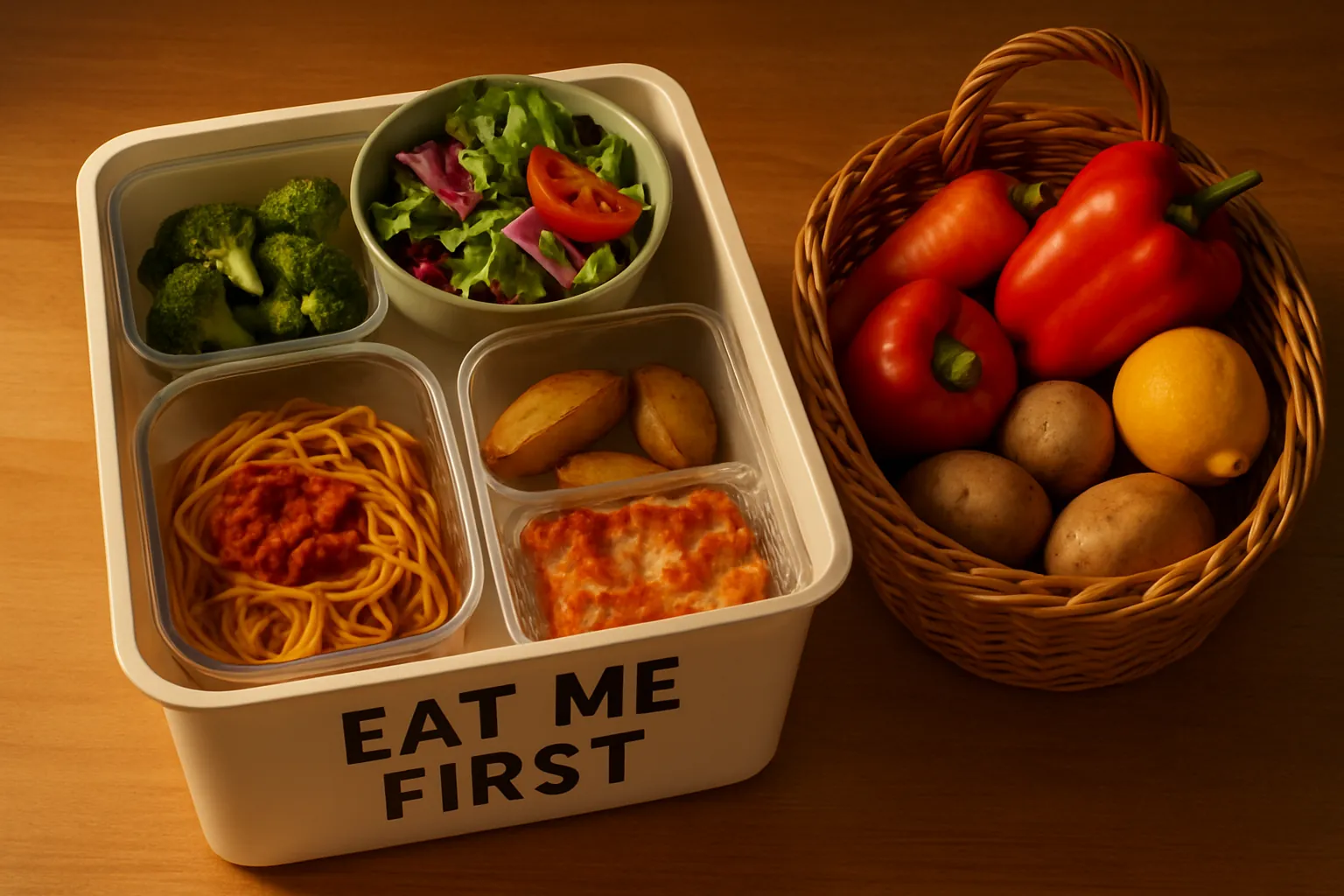
2. Make a ‘First In, First Out’ Zone
Milk hiding in the back? Wilted greens found after it’s too late to save them? The EPA reports that food is the single biggest landfill contributor from homes. Reorder your fridge, like grocery stores do, so older items get used first.
“More food ends up in landfills than anything else in household trash.” — US EPA
Bold takeaway: Move soon-to-expire or already-opened foods to a special ‘Eat Me First’ bin or shelf near the front of your fridge.
- Label a bin or small basket as ‘Eat Me First.’
- Place soon-to-expire groceries in this area each time you unpack groceries.
Next step: Make it a habit to check the ‘Eat Me First’ bin before every meal or snack.
3. Master the Freezer Shuffle
It’s easy to forget the power of your freezer! The USDA estimates that the average U.S. household tosses almost 32% of the food they buy. Freezing foods before they go bad is your best “pause button.”
“The average U.S. household wastes $1,866 on food every year—much of it preventable if you freeze at-risk foods.” — Futurity
Bold takeaway: Almost any fruit, veggie, or leftover can be frozen for later—don’t wait until it’s nearly spoiled.
- Keep a “freeze soon” reminder note on your fridge.
- Freeze bread, veggies, soups, and even milk before their expiration dates.
Next step: Once a week, do a five-minute fridge scan and transfer anything at risk of spoiling into the freezer.
4. Make “Waste Day” a Weekly Ritual
The EPA estimates the per-person cost of food waste at $728 a year—that’s real cash you can rescue. By setting energy around a regular cleanup and freezer reload, you keep food out of the trash and money in your pocket.
“If a household of four could cut waste in half, it’s like getting a $700 raise.” — BioCycle/EPA
Bold takeaway: Put 10 minutes on your family calendar for a weekly ‘waste audit’ and quick freezer shuffle.
- Toss what’s truly spoiled.
- List & freeze what you can still use later (chopped bananas, veggie ends for soup, etc.).
- Plan the next meal around those “Eat Me First” finds.
Next step: Set an alert for “Waste Day”—and treat it like money-saving game time for the whole household.
Bottom line? U.S. households throw away thousands each year in perfectly good food because it gets buried at the back of the fridge. By tracking what you toss, moving soon-to-expire foods up front, freezing at-risk items, and setting a regular cleanup, you can finally start feeding your family (not the landfill) and put serious dollars back in your pocket. Kick off the fridge-to-freezer shuffle tonight—your bank account will thank you!