
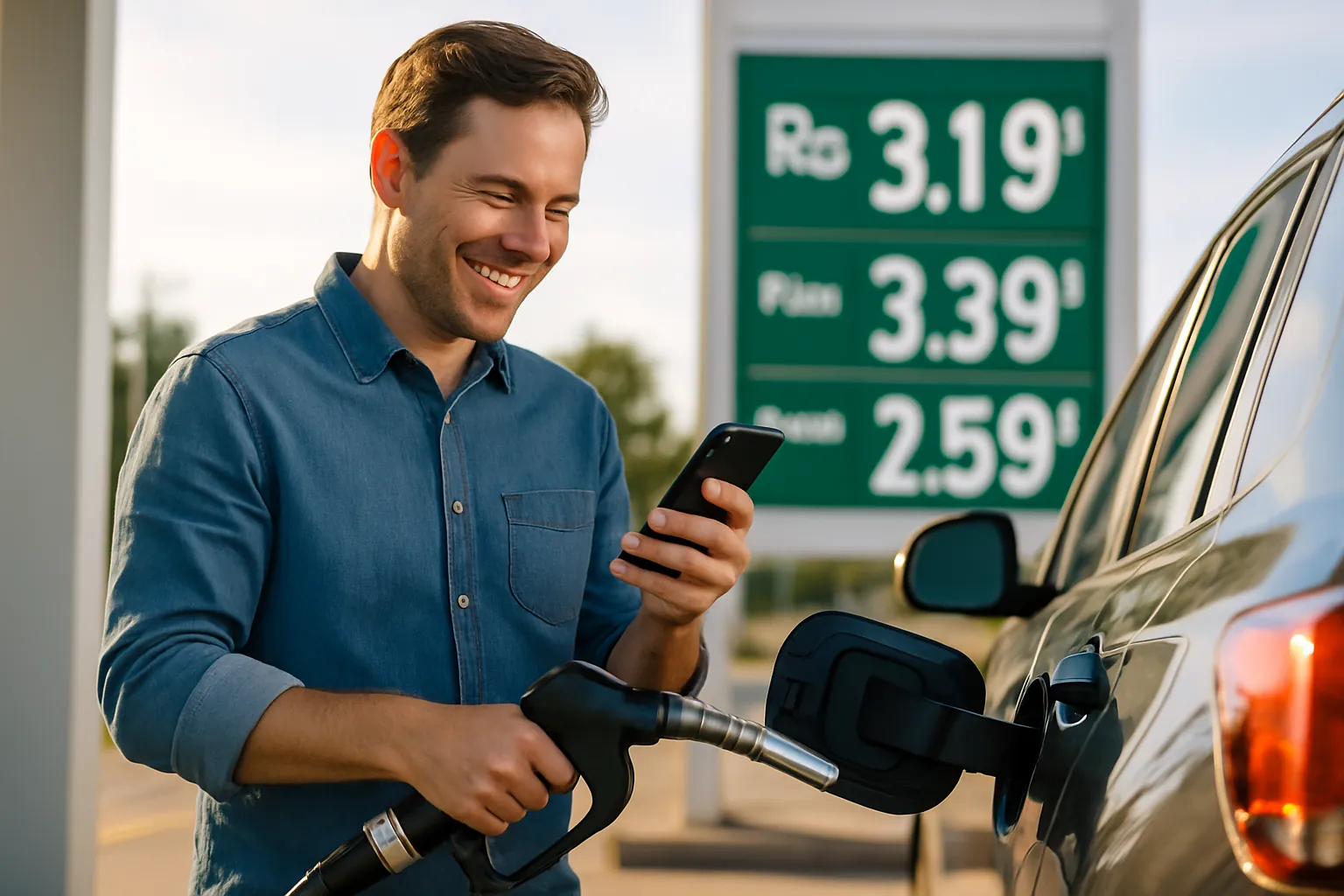
Crush High Gas Prices Today: 3 Secret Apps That Could Slash Your Pump Costs by 20%
You pull up to the pump, watch the numbers race upward, and feel your stomach drop. Gas prices jump without warning, but your budget never seems to catch up. The good news: three free, under-the-radar apps and a few smart habits can help you trim your fuel bill by as much as 20% starting with your very next fill-up. Here’s how to make every gallon—and every dollar—go further.
1. Stop Paying More Than Your Neighbor: Use Price-Spotting Apps
Problem: You grab the first station you see and hope it’s cheap. The price difference between two stations on the same street can be shocking. According to AAA (June 2023), drivers in one city often see a 40-cent swing within five miles.
Many people still rely on roadside signs. Those big numbers look similar, so we assume prices match. They don’t. GasBuddy’s 2022 study found users saved an average of 15 cents per gallon just by checking the app before turning in.
Think of it like grocery shopping. You wouldn’t ignore a store flyer showing milk for $1 less. Fuel price apps serve the same flyer—only faster and for every station around you.
FACT: The U.S. Energy Information Administration reports that location can add up to 25% to your fuel bill, even inside one city.
Apps update in near real time. Drivers share prices, and stations sometimes upload deals directly. One quick glance tells you if the station across the street is the smart choice.
Seen a deal but driving past? Some apps let you “lock in” the cheaper price for a short window. This protects you from sudden spikes that can happen overnight.
Bold takeaway: Compare before you fill and keep more cash.
- Download a well-known price app like GasBuddy, Waze, or AAA Mobile.
- Enable location so the app sorts stations by distance and price.
- Check the map while parked at home—not while driving.
- Pick the cheapest spot within a three-mile radius to avoid burning savings on extra miles.
- Use the app’s price-change alerts to dodge mid-week hikes.
Next action: Open your phone’s app store, type “gas prices,” and install the top-rated free option right now.
2. Turn Your Swipe into Cash: Fuel Cashback Programs
Problem: You pay, drive away, and forget the transaction. That single swipe could have handed you money back. According to Upside’s 2023 user report, members snag up to 25 cents per gallon when they claim offers through the app.
Card-linked reward programs do the heavy lifting. Connect your regular debit or credit card once, buy fuel as usual, and receive a small deposit or statement credit automatically. No points math, no mail-in rebates.
The Consumer Financial Protection Bureau notes that credit cards offering 3% to 5% gas rewards often beat regular cards over a full year. That’s real cash you can redirect toward groceries or savings.
Take a real-life example. Filling a 15-gallon tank twice a week at $3.80 per gallon costs about $456 a month. A 5% reward means $23 back without changing stations or habits.
FACT: A 2022 NerdWallet survey found 42% of drivers don’t use any fuel rewards, leaving “easy money” behind.
Most apps post rewards within 24 to 48 hours. Several let you transfer to PayPal or bank accounts, so the savings feel tangible, not theoretical.
Weekly promotions sweeten the deal. For example, Upside occasionally boosts earnings by an extra 10 cents per gallon for new stations, while BPme Rewards offers double points on weekends.
Bold takeaway: Every swipe can pay you back if you link it first.
- Download a cashback app like Upside or Shell Fuel Rewards.
- Create an account and secure-link your everyday payment card.
- Open the app before you pump to “claim” an offer.
- Pay at the pump as usual—no codes, no extra steps.
- Watch your balance grow and cash out once a month.
Next action: Pick one app tonight and connect your main gas card. You’ll earn on tomorrow’s commute.
3. Drive Smarter, Go Farther: Simple Habits That Stretch Every Gallon
Problem: Even with cheap gas and rewards, wasteful driving can erase the gains. The U.S. Department of Energy (DOE) says aggressive driving—speeding, rapid acceleration, hard braking—lowers mileage by 15% to 30% on highways.
Most of us push pedals harder than we realize. A small change in foot pressure can mean an extra day between fill-ups. Imagine stretching a 400-mile tank to 440 miles just by easing off the gas.
Speed matters. DOE research shows every 5 mph over 60 is like paying an extra 24 cents per gallon. On a 30-mile daily round trip, cruising at 65 instead of 75 can save nearly two gallons a week.
FACT: Properly inflated tires improve fuel economy by up to 3%, says the National Highway Traffic Safety Administration.
Extra weight hurts, too. Carrying 100 pounds of unneeded gear in the trunk cuts mileage about 1%. Sports gear, cases of water, or forgotten donations all add invisible costs.
A roof rack is even worse. The EPA notes that an empty roof box can reduce highway mileage by up to 10%. Removing it when not in use is like earning a permanent discount.
Air-conditioner myths persist. Modern A/C systems are efficient, yet idling with the A/C blasting still wastes fuel. If possible, park in the shade and drive off promptly instead of cooling a stationary car.
Bold takeaway: Gentle driving and light cars equal instant savings.
- Accelerate smoothly, aiming for “steady not speedy” starts.
- Set cruise control at 60-65 mph on open roads.
- Check tire pressure monthly; match the sticker inside the driver door.
- Unload heavy items and remove unused roof racks tonight.
- Combine errands so a warm engine handles many stops instead of several cold trips.
Next action: Before tomorrow’s drive, walk around your car. Empty the trunk, inflate tires, and watch your fuel gauge fall more slowly all week.
Conclusion
High gas prices don’t have to drain your wallet. First, compare stations with a price-spotting app. Second, link a fuel cashback program and get paid for every swipe. Third, adjust driving habits to stretch each gallon. Take the five minutes after reading this to download one app, enroll in one rewards program, and check your tire pressure. Your next fill-up will already cost less.