

Breaking Down the True Cost of a Higher Down Payment in 2025—Is Bigger Always Better for Homebuyers?
Deciding how much to put down when buying a home is a big money move. If you’re saving up for your dream house, you’ve probably heard that bigger is better when it comes to down payments. But is that true for everyone? With mortgage rates shifting and home prices at record highs, understanding the impact of a larger down payment—down to the dollars and cents—can help you make the smartest choice for your situation. Let’s explore how each extra dollar works for you (and sometimes against you), using real numbers and easy comparisons.
How a Larger Down Payment Can Lower Your Mortgage Costs
When it comes to crunching numbers, every extra $10,000 added to your down payment can save you around $65–$70 per month on your mortgage. That may sound great, but when you do the math, it often takes more than ten years to reach the break-even point—meaning it’s a long game rather than an overnight windfall. Still, there are real perks to putting more cash down up front.
One of the biggest ongoing benefits is a lower monthly payment. By reducing the amount you borrow, you’ll have less to pay back every month. For example, say you’re buying a $400,000 house and putting down 10% ($40,000). Your loan would be for $360,000. But if you bump that to 20% (or $80,000), you’d only borrow $320,000—slashing your monthly payments and the interest you pay over time.
“Let me start with a simple calculation that may surprise you. On average, for every $10,000 you apply towards your down payment, you will save approximately $65-70 per month,” reports a recent Grand Junction Sentinel article.
It doesn’t stop there. When you pay at least 20% down, you usually avoid something called private mortgage insurance, or PMI. PMI is extra insurance that lenders charge if your down payment is below 20%. It adds anywhere from $30 to $70 per month for every $100,000 borrowed, which can really add up. Skip the PMI and you not only save money, but you also get that psychological win of knowing your house costs less each month.
Larger down payments can also help you get better loan terms. Banks often reward bigger down payments with lower interest rates, since you’re less of a risk. Over 30 years, dropping your interest rate by even half a percent can save tens of thousands in total interest costs. For instance, making a 20% down payment instead of 10% on a $500,000 home—at a 5% loan rate—could save you almost $97,000 in interest across the life of your mortgage.
Want to keep your options open? Your credit score may actually improve after closing if you borrow less and make payments on time, widening your future opportunities for refinancing or other credit.
Next Steps: If you’re considering a larger down payment, use an online mortgage calculator to see exactly how your payment, interest costs, and PMI change. Make sure you’re also keeping enough cash for emergencies and other goals—putting every dollar into your house isn’t always wise.
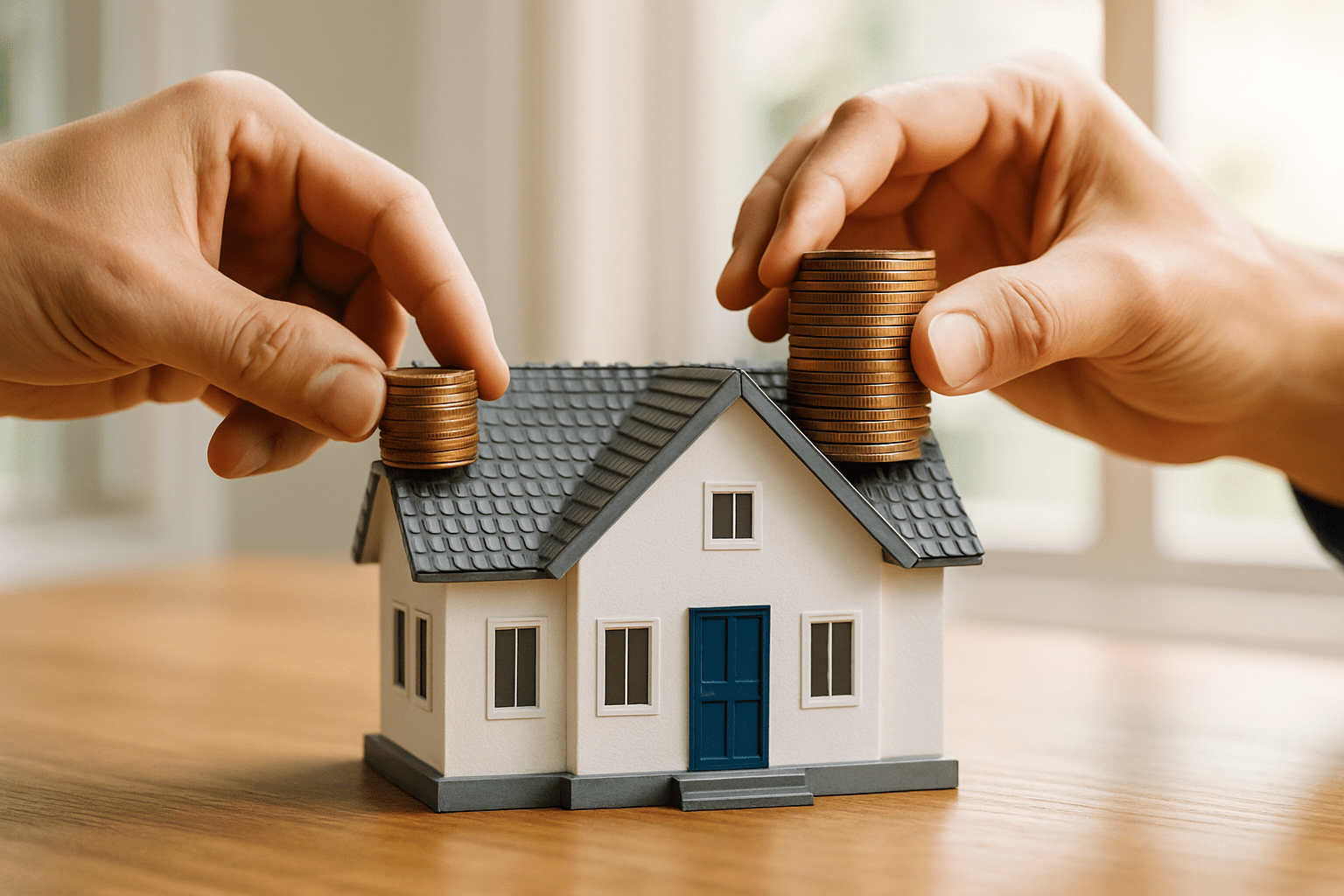
Why Going Bigger Isn’t Always Better: Liquidity, Opportunity Cost, and Market Trends
While the upfront savings of a larger down payment are appealing, it’s important to think about the money you might need for life outside your home. Dropping all your savings into a house could leave you cash-strapped for emergencies, home repairs, or even new furniture.
This is called a liquidity problem—when your money is tied up and hard to access. Homeowners sometimes call this being “house poor.” If all your funds go toward the down payment, you might struggle to pay for surprises, and credit card debt can sneak up fast.
“Allocating a large sum to a down payment may limit your available cash for emergencies, investments, or home improvements,” notes an analysis at Guiding Cents.
Another big consideration is opportunity cost. That’s a fancy way of saying: what else could your money do? For example, if you put $20,000 extra toward your down payment, but you could earn more by investing it or paying off high-interest debt, you might actually lose out in the long run. Some experts suggest a blended approach—put down enough to avoid PMI and get a great rate, but keep some funds for investing or future needs. Think of it like putting your eggs in a few baskets, instead of one big one.
Market conditions matter too. In hot housing markets—like Miami, where the median down payment hit over $86,000 this year—larger down payments can make your offer more attractive to sellers. Sellers often pick offers that look strong and reliable. But summer trends in 2024 showed that when mortgage rates dipped, average down payments also got smaller. From June to September, the average down payment nationwide dropped to 14.5% of the home price—meaning buyers could keep a little more cash on hand for other goals.
So, bigger isn’t always better. Balance is key. Ask yourself:
- How stable is my job or household income?
- Will I have enough savings left after my down payment?
- Would paying off debts or investing part of those funds serve me better?
Next Steps: Map out your total cash, split between down payment, emergency fund, and extras. Talk to a lender about your specific options. Remember, you can always make extra payments toward your loan later, but you can’t easily pull cash out without refinancing.
Comparing the Numbers and Finding Your Personal Best-Fit Down Payment
Let’s run through what all these statistics mean for you, the everyday homebuyer. The big question: does a higher down payment actually give you the best bang for your buck, or is it smarter to stick with the minimum and put your extra funds elsewhere?
If you look at the long-term savings, putting down 20% or more can seriously cut your interest cost—almost $97,000 in savings over 30 years on a $500,000 loan in some cases. That’s a powerful argument for those planning to stay put for the long haul. But remember: it often takes 10–12 years to break even when you factor in the cash you tie up versus the money you save each month. If you might sell or refinance sooner, the equation changes.
“It often takes over a decade to break even on a larger down payment, so think carefully about your timeline and goals before deciding how much to pony up,” financial analysts at HSH.com suggest.
APR (annual percentage rate) and your credit score also play a part. Shopping around for your loan, maintaining a clean credit record, and understanding your lender’s offers can help you get the lowest possible rate, saving thousands even if your down payment isn’t sky-high. Some government-backed loans (like FHA or VA) require smaller down payments, though there’s usually an extra fee or higher interest rate attached.
The smartest down payment is the one that fits your needs, not just the biggest number you can swing. Don’t feel pressured to empty your savings just to reach 20%. Sometimes, a 10–15% down payment strikes the right balance, letting you keep money on hand while still lowering your loan costs.
And if you do choose to put less down and pay PMI for a few years, check with your lender frequently: you might be able to drop the PMI early once your home’s value rises or as you pay down your loan.
Next Steps:
- Get prequalified and compare loan terms with different down payment amounts.
- Calculate how long you plan to stay in your home—if it’s under 10 years, crunch the break-even math carefully.
- Ask your lender to spell out how PMI works and any rules to remove it sooner.
- Remember, a great home purchase is one that lets you sleep at night—with a mortgage you can handle and a cash cushion for life’s surprises.